Contents:
- The 7 Best Drip Irrigation Kits for Flower Gardens
- Rain Bird DRIP8-PRO Drip Irrigation Watering Kit
- Drip Depot Beginner Drip Irrigation Kit
- Raindrip R560DP Automatic Watering Kit
- Mister Landscaper Complete Drip Kit (100-Plant Coverage)
- Orbit 69525 Micro Bubbler and Drip Irrigation Kit
- DIG GE200 Drip Irrigation Kit with WiFi Timer
- Flantor Garden Irrigation System (Adjustable DIY Kit)
- Best Drip Irrigation Flower Garden Kits: Quick Comparison
- Drip Irrigation vs. Soaker Hoses: Know the Difference
- How to Choose the Best Drip Irrigation System for Your Flower Garden
- Step 1: Measure Your Bed and Count Your Plants
- Step 2: Identify Your Water Pressure
- Step 3: Match Emitter Flow Rate to Your Flower Types
- Step 4: Decide on Timer Automation
- Step 5: Consider Your USDA Hardiness Zone and Climate
- Installation Tips for Drip Irrigation in Flower Beds
- Lay Main Line First, Then Branch Out
- Stake Emitters Within 2 Inches of the Root Zone
- Mulch Over the System
- Frequently Asked Questions
- How long should I run a drip irrigation system in a flower garden?
- Can I connect a drip irrigation kit directly to my outdoor spigot?
- What is the best drip irrigation setup for a flower garden in a raised bed?
- Will drip irrigation work for potted flowers on a patio?
- How do I prevent clogged emitters in a drip system?
- Before Your First Season: A Starting Checklist
The smell hits you first — damp soil warming in the morning sun, petunias just beginning to open, and the faint mineral scent of water doing its quiet work underground. That’s what a well-watered flower garden feels like. Getting there, though, requires more than a watering can and good intentions. Roots need consistency. Flowers need moisture delivered at the right depth, at the right time — and that’s exactly what a drip irrigation system provides. If you’re searching for the best drip irrigation flower garden setup, you’re making one of the smartest investments a new gardener can make.
Drip irrigation delivers water directly to the root zone, reducing evaporation by up to 50% compared to overhead sprinklers. For flower beds, that matters enormously — wet foliage is a fast lane to fungal disease, and inconsistent watering is the number one reason beginner gardeners lose their blooms mid-season. The systems below have been evaluated on ease of installation, compatibility with common flower bed configurations, flow rate precision, and overall value for US gardeners.
The 7 Best Drip Irrigation Kits for Flower Gardens
1. Rain Bird DRIP8-PRO Drip Irrigation Watering Kit
Rain Bird is the brand most professional landscape contractors reach for first, and their DRIP8-PRO kit earns that reputation. The kit covers up to 8 plants but is easily expandable with additional 1/4-inch tubing and emitters sold separately. Each pressure-compensating emitter delivers a precise 0.5 GPH (gallons per hour), which is ideal for shallow-rooted annuals like marigolds and zinnias. Setup takes under 30 minutes — you punch holes in the 1/2-inch main line, insert the barbed emitters, and stake them near the root zone. The included filter prevents clogging, which is the single biggest maintenance headache in drip systems. Price: ~$35.
- Pros: Pressure-compensating emitters work on slopes; includes filter; trusted brand with wide parts availability
- Cons: Only covers 8 plants out of the box; no timer included
- Best for: Dedicated flower beds with consistent plant spacing
2. Drip Depot Beginner Drip Irrigation Kit
Drip Depot built this kit specifically for first-timers, and it shows. The instruction manual is genuinely readable — a rarity in irrigation packaging. The kit includes 50 feet of 1/2-inch polyethylene tubing, 10 adjustable emitters (0.5 to 2 GPH), a backflow preventer, a filter, and a pressure regulator. That last component is critical: most US residential water supplies run at 40–80 PSI, but drip systems operate optimally at 15–30 PSI. Without a regulator, you’ll blow emitters off the line. At around $45, this is one of the most complete entry-level packages available. The adjustable emitters let you customize flow for thirstier plants like dahlias versus drought-tolerant lavender in the same bed.
- Pros: Pressure regulator and backflow preventer included; adjustable emitters; excellent instructions
- Cons: Adjustable emitters can drift out of calibration over a season
- Best for: Mixed flower beds with varied water needs
3. Raindrip R560DP Automatic Watering Kit
The Raindrip R560DP bundles a battery-operated timer with a complete drip system — a meaningful upgrade for gardeners who travel or simply forget to water. The timer runs on two AA batteries and can be programmed for daily or every-other-day cycles, with duration control from 1 to 120 minutes. The kit covers up to 5 flower beds or container groupings using 1/4-inch distribution tubing. Flow rate per emitter sits at 1 GPH, which suits medium-water-demand flowers like coneflowers, black-eyed Susans, and daylilies. Price: ~$60. The timer housing is weather-resistant but not waterproof — store it under an eave or wrap it in winter if you’re in USDA Zones 5 or colder.
- Pros: Built-in timer; good for container gardens; simple programming
- Cons: Timer not fully waterproof; 5-zone limit; battery replacement needed seasonally
- Best for: Gardeners who want set-and-forget automation on a budget
4. Mister Landscaper Complete Drip Kit (100-Plant Coverage)
Scale matters. If you’re working with a large cutting garden or a full perennial border, most starter kits fall short. The Mister Landscaper system covers up to 100 plants using a combination of 1/2-inch main line, 1/4-inch distribution tubing, and adjustable emitters. The kit includes 150 feet of total tubing, 50 emitters, 50 stakes, connectors, and end caps. Emitter flow is adjustable from 0 to 3 GPH, giving you fine control across a diverse planting. At around $75, the per-plant cost works out to under $0.75 — exceptional value. One caveat: the tubing is thinner-walled than Rain Bird’s, making it slightly more vulnerable to UV degradation in full-sun installations after 3–4 seasons.
- Pros: High plant coverage; adjustable emitters; good value per plant
- Cons: Thinner tubing; no pressure regulator included
- Best for: Large flower gardens, cutting gardens, or community plots
5. Orbit 69525 Micro Bubbler and Drip Irrigation Kit
Orbit’s 69525 kit introduces micro bubblers alongside standard drip emitters — a distinction worth understanding. While drip emitters release water in slow drops (0.5–2 GPH), micro bubblers release a gentle stream at 4–8 GPH, saturating a slightly wider root zone. For large flowering perennials like peonies, roses, or ornamental grasses, this faster delivery reduces overall run time while still keeping water at ground level. The kit covers up to 10 plants and includes a Y-connector so you can run two zones from a single spigot. Price: ~$50. The included pressure regulator steps input pressure down to 25 PSI, protecting the system across most US municipalities.
- Pros: Micro bubblers suit large-rooted plants; Y-connector adds flexibility; pressure regulator included
- Cons: Bubblers can oversaturate compact flower beds; not ideal for closely spaced annuals
- Best for: Beds with established shrub roses, peonies, or large ornamental perennials
6. DIG GE200 Drip Irrigation Kit with WiFi Timer
Smart watering has arrived in the flower garden. The DIG GE200 pairs a drip emitter system with a WiFi-enabled timer that connects to your home network and is controlled via smartphone app. You can set precise watering schedules, pause remotely if rain is incoming, and track run history. The system covers up to 10 emitter zones. Each emitter delivers 0.5 GPH. The app is compatible with iOS and Android and functions reliably within standard 2.4GHz WiFi range. Price: ~$90–$110 depending on retailer. This is the priciest option on this list, but for gardeners in water-restricted municipalities (common in the US Southwest and Mountain West), the remote control capability can prevent accidental violations — and fines.
- Pros: WiFi smart control; app-based scheduling; remote pause feature
- Cons: Requires stable WiFi near the garden; highest price point; app has occasional connectivity lag
- Best for: Tech-comfortable gardeners in drought-prone or water-restricted areas
7. Flantor Garden Irrigation System (Adjustable DIY Kit)
The Flantor kit is a flexible, budget-friendly option that gives beginners room to experiment without financial pressure. The kit includes 82 feet of 1/4-inch tubing, 20 misting nozzles, 10 drip emitters, and a full set of connectors. At around $20–$25, it’s the lowest-cost complete system on this list. The misting nozzles are primarily suited for humidity-loving flowers like begonias, impatiens, and ferns. One important note: misting nozzles wet foliage, which can increase disease risk in some flowering plants — use the drip emitters for roses, dahlias, or any variety prone to powdery mildew. The Flantor works best as a supplemental system or for container garden arrangements on patios and balconies.
- Pros: Very low cost; includes both misting and drip options; good for containers
- Cons: Misting nozzles not appropriate for all flower types; thinner tubing; limited coverage area
- Best for: Budget-conscious beginners, container gardens, or shade-garden setups
Best Drip Irrigation Flower Garden Kits: Quick Comparison
| Kit | Price | Coverage | Timer Included | Best For |
|---|---|---|---|---|
| Rain Bird DRIP8-PRO | ~$35 | 8 plants | No | Dedicated flower beds |
| Drip Depot Beginner Kit | ~$45 | Variable | No | Mixed flower beds |
| Raindrip R560DP | ~$60 | 5 zones | Yes (battery) | Automation beginners |
| Mister Landscaper 100-Plant | ~$75 | 100 plants | No | Large gardens |
| Orbit 69525 | ~$50 | 10 plants | No | Large perennials, roses |
| DIG GE200 WiFi | ~$90–$110 | 10 zones | Yes (WiFi) | Smart/tech users |
| Flantor DIY Kit | ~$20–$25 | Variable | No | Containers, budget buyers |
Drip Irrigation vs. Soaker Hoses: Know the Difference
New gardeners often confuse drip irrigation with soaker hoses — they’re related, but not the same. A soaker hose is a porous rubber or recycled-plastic tube that weeps water along its entire length, typically delivering moisture in a 12–18 inch band on either side. It works well in straight rows — think vegetable gardens with uniform spacing. Flower beds, however, are rarely uniform. You have plants at irregular intervals, different heights, different root depths, and dramatically different water needs sitting inches apart.
Drip irrigation solves this with targeted emitters. Each emitter serves one plant. You can place a 2 GPH emitter next to a thirsty dahlia and a 0.5 GPH emitter next to a drought-tolerant echinacea in the same bed, on the same line, running at the same time. Soaker hoses can’t do that. For flower gardens specifically — with their diversity of species and spacing — a drip system gives you surgical control that soaker hoses simply can’t match.
🌿 What the Pros Know
Professional flower farmers run their drip systems in the early morning — typically between 5 AM and 7 AM. This allows soil to absorb moisture before peak evaporation hours (10 AM–2 PM), and ensures foliage that accidentally gets wet dries before nightfall. Wet foliage overnight dramatically accelerates fungal issues like botrytis and powdery mildew, which are among the top killers of garden flowers in humid US climates. Set your timer accordingly from day one.
How to Choose the Best Drip Irrigation System for Your Flower Garden
Step 1: Measure Your Bed and Count Your Plants
Before purchasing anything, walk your flower bed with a tape measure. Record the total length of your planting area and count the number of individual plants or planting zones. A 20-foot border with 15 plants needs very different hardware than a 100-square-foot cutting garden with 60 stems. Most kit labels state plant capacity — hold them to it. Overcrowding emitters onto undersized main-line tubing drops pressure across the system and leads to uneven watering.
Step 2: Identify Your Water Pressure
US residential water pressure typically runs between 40 and 80 PSI. Drip systems operate best at 15–30 PSI. A pressure regulator — either included in the kit or purchased separately for around $8–$12 — is non-negotiable unless your home already has a pressure-reducing valve. Installing a system without one at 60 PSI will cause emitter blowouts within a single season.
Step 3: Match Emitter Flow Rate to Your Flower Types
This is where most beginners make mistakes. Different flowers have dramatically different water needs. Use these benchmarks as starting points:
- Low water (0.5 GPH emitters): Lavender, echinacea, black-eyed Susan, ornamental grasses
- Medium water (1 GPH emitters): Marigold, zinnia, salvia, coneflower, daylily
- High water (2 GPH emitters): Dahlia, rose, delphinium, astilbe, hydrangea
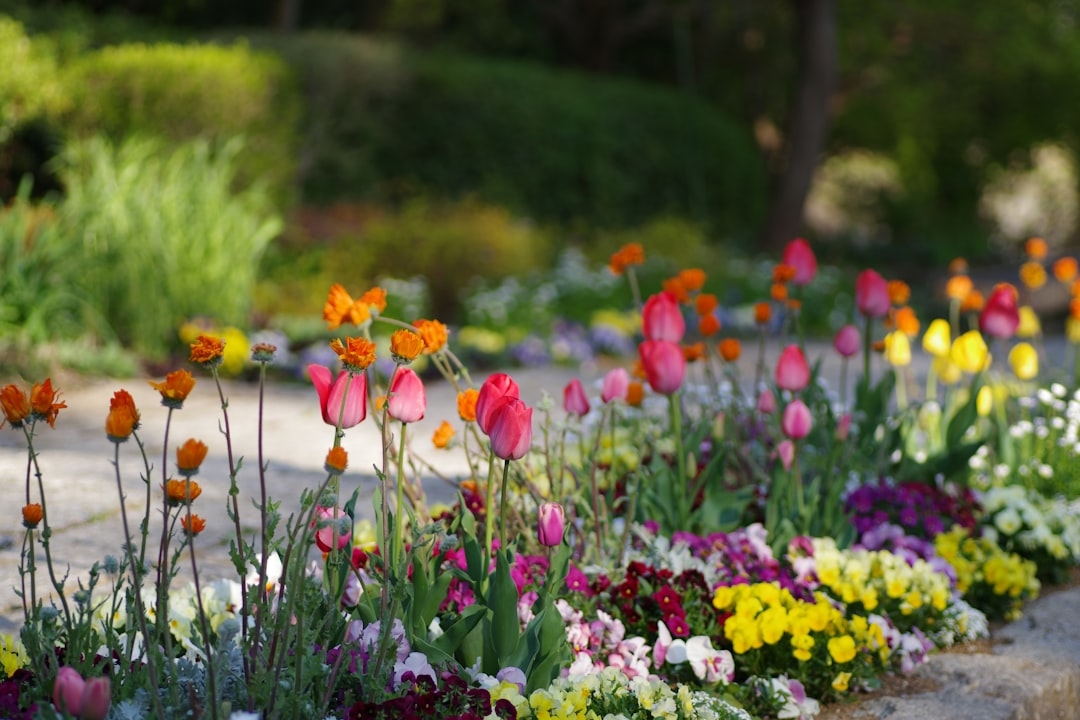
Adjustable emitters let you fine-tune on the fly after observing how your plants respond in the first two weeks.
Step 4: Decide on Timer Automation
A standalone drip kit without a timer requires manual valve operation. That’s fine for attentive gardeners, but one missed week during a summer heat event can cost you an entire season of blooms. Battery-operated timers (like the one in the Raindrip R560DP) start around $20–$30 added to a base system. WiFi timers give you remote control. For most beginners, a simple battery timer is the sweet spot between convenience and cost.
Step 5: Consider Your USDA Hardiness Zone and Climate
Gardeners in USDA Zones 8–11 (California, Texas Gulf Coast, Florida, Pacific Northwest) may run their drip systems year-round. In Zones 4–7, systems need to be winterized — drained and disconnected before the first hard freeze to prevent cracked tubing and split emitters. Polyethylene tubing survives freeze-thaw cycling reasonably well when empty; leave water in it and you’ll be replacing components every spring.
“The biggest mistake I see in home flower gardens is people buying a drip system and then running it on the same schedule all season. Your garden’s water needs in May are nothing like its needs in August. Check your soil moisture weekly with a finger test — if the top two inches are dry, it’s time to water, regardless of what the timer says.”
— Dr. Margaret Holloway, Certified Professional Horticulturist, Colorado State University Extension
Installation Tips for Drip Irrigation in Flower Beds
Lay Main Line First, Then Branch Out
Run your 1/2-inch main supply line along the edge or spine of the bed before punching any holes. Cap the end, then pressurize briefly to check for leaks at all fittings. Only after confirming a leak-free main line should you add your 1/4-inch distribution tubing and emitters. Working in this sequence catches problems before you’ve committed 30 emitter positions that need to be redone.
Stake Emitters Within 2 Inches of the Root Zone
Emitter placement is more precise than most beginners realize. Position the emitter stake 2–3 inches from the base of the stem, angled slightly toward the root mass. For large flowering shrubs like roses or hydrangeas, use two emitters on opposite sides of the plant — one emitter can’t uniformly saturate a root zone that spans 18–24 inches in diameter.
Mulch Over the System
Two to three inches of organic mulch (wood chips, shredded bark, or straw) laid over your drip lines does three things simultaneously: it reduces soil evaporation by up to 25%, moderates soil temperature to protect shallow roots, and shields the 1/4-inch tubing from UV degradation. This single step can extend the lifespan of budget-tier tubing by an additional 2–3 seasons.
Frequently Asked Questions
How long should I run a drip irrigation system in a flower garden?
Most flower gardens need 20–45 minutes of drip irrigation per session, 2–3 times per week during the growing season. The exact duration depends on your emitter flow rate, soil type, and local climate. Sandy soils drain quickly and may need shorter, more frequent sessions. Clay soils absorb slowly — run time over 30 minutes risks surface pooling. Start at 30 minutes every other day and adjust based on soil moisture checks.
Can I connect a drip irrigation kit directly to my outdoor spigot?
Yes. All kits on this list connect to a standard 3/4-inch hose thread spigot. You’ll need a backflow preventer (prevents garden water from siphoning back into your home supply) and a pressure regulator if neither is included in the kit. These add-ons cost $15–$20 total and are widely available at hardware stores or online.
What is the best drip irrigation setup for a flower garden in a raised bed?
For raised beds, a simple loop layout works best. Run 1/2-inch main line around the perimeter, then add 1/4-inch lateral lines across the width every 12–18 inches. Place emitters at each plant location. This grid delivers even coverage and prevents dry zones in the bed’s center. The Drip Depot Beginner Kit and Rain Bird DRIP8-PRO both adapt well to raised-bed configurations.
Will drip irrigation work for potted flowers on a patio?
Absolutely. Use 1/4-inch tubing with individual emitters run to each pot. For pots under 12 inches in diameter, a 0.5 GPH emitter is usually sufficient. Larger containers (14 inches and up) benefit from 1 GPH emitters or two 0.5 GPH emitters placed on opposite sides. The Flantor DIY Kit and the Raindrip R560DP are particularly well-suited to container arrangements.
How do I prevent clogged emitters in a drip system?
Install an inline filter rated at 150–200 mesh at the spigot connection — most quality kits include one. Flush the system by removing end caps and running water for 60 seconds at the start of each season to clear debris. Inspect emitters monthly during peak use; a clogged emitter will show as a plant that wilts despite the system running. Soaking clogged emitters in white vinegar for 30 minutes dissolves most mineral deposits.
Before Your First Season: A Starting Checklist
Purchase decisions made, system installed — here’s what to do before you walk away and let it run. First, run the system manually for a full cycle and observe every emitter. Each one should produce a visible slow drip. Any that appear dry are either clogged or have a loose barb connection. Fix these before automating. Second, push a finger 3–4 inches into the soil at the base of three different plants immediately after the first automated cycle. The soil should feel damp but not waterlogged at that depth. If it’s dry, extend your run time by 10 minutes. If it’s soggy, reduce by 10.
Third — and most importantly — revisit the system after the first heavy rainfall. Many beginner gardeners forget to pause their timers, adding irrigation on top of saturated soil. Overwatering kills flowers as effectively as drought; roots deprived of oxygen in waterlogged soil collapse within days. A rain gauge mounted near the garden (under $10 at any garden center) takes the guesswork out of this decision. Once you’ve dialed in the settings for your specific plants, soil, and climate, a drip system becomes almost invisible — which is exactly the point. Your job shifts from watering to watching flowers grow.