Contents:
- Why the Right Nozzle Makes a Real Difference for Flowers
- The 7 Best Garden Hose Nozzles for Flowers, Ranked
- Dramm 9-Pattern Hose Nozzle
- Melnor XT Turbo Oscillating Nozzle
- Gilmour Thumb Control Watering Nozzle
- GREEN MOUNT Watering Wand with 8-Pattern Nozzle
- Orbit Zinc 8-Pattern Nozzle
- Rainbird Easy-Grip 9-Pattern Nozzle
- Karcher Multi-Spray Wand
- Side-by-Side Comparison: Best Garden Hose Nozzle for Flowers
- How to Choose the Best Hose Nozzle for Flower Watering
- Match the Nozzle to Your Flower Types
- Consider Your Garden Layout and Size
- Spray Pattern Settings Explained for Beginners
- Material and Climate: Match Your Region
- Eco-Friendly Watering Practices and Nozzle Choice
- FAQs: Garden Hose Nozzles for Flower Watering
- What spray setting is best for watering delicate flowers?
- Can I use a regular garden hose nozzle on flower seedlings?
- How many spray patterns do I actually need for a flower garden?
- Is brass better than plastic for garden hose nozzles?
- How do I prevent overwatering flowers with a hose nozzle?
- Make Your First Watering Season Count
You’ve planted your first bed of peonies or impatiens, grabbed the hose, and blasted them into oblivion. It happens to almost every new gardener. Choosing the best garden hose nozzle for flowers isn’t obvious — hardware stores carry dozens of options, and the packaging rarely explains which ones won’t shred a delicate bloom on contact. This guide cuts through the confusion with honest comparisons, real specs, and clear recommendations so you can water with confidence from day one.
Why the Right Nozzle Makes a Real Difference for Flowers
Flowers aren’t lawns. A jet setting that cleans a driveway will strip petals, compact soil, and expose roots. Delicate annuals like petunias and lobelia need water pressure under 30 PSI at the nozzle tip, while established perennials like coneflowers can handle slightly more. The spray pattern matters just as much as pressure — a wide, gentle mist mimics rainfall and distributes moisture evenly without creating runoff channels in your beds.
Water delivery method also affects disease. Overhead watering with a coarse spray leaves standing droplets on foliage, which invites fungal problems like powdery mildew and botrytis. A nozzle with a fine, downward-angled mist minimizes leaf wetness while still hydrating the root zone effectively. That single equipment choice can reduce fungal spray treatments significantly across a growing season.
The 7 Best Garden Hose Nozzles for Flowers, Ranked
1. Dramm 9-Pattern Hose Nozzle
Dramm has been making horticultural watering tools since 1941, and this nozzle shows that experience. It offers nine spray patterns including a ultra-fine mist, a flat fan, and a soaker setting — all accessible via a single rotating collar. The brass construction holds up to UV exposure without cracking, and the rubber grip stays comfortable even with wet hands. Flow rate tops out around 2.5 gallons per minute on the fan setting, which is gentle enough for seedlings and newly transplanted annuals. At roughly $22–$28, it’s the pick most professional greenhouse growers reach for first.
- Pros: Durable brass body, 9 versatile patterns, comfortable ergonomics
- Cons: Heavier than plastic alternatives; pattern collar can stiffen in cold temperatures
- Best for: Gardeners who want one nozzle that handles every task
2. Melnor XT Turbo Oscillating Nozzle
This nozzle doubles as a light sprinkler, making it ideal for gardeners with wide flower borders who don’t want to stand in place. It attaches to any standard ¾-inch hose fitting and fans water across a 18-foot arc at adjustable flow rates. The gentle curtain of water it produces is particularly well-suited to cottage garden plantings — think zinnias, cosmos, and larkspur spaced closely together. Priced at $18–$24, it delivers excellent coverage per dollar. One limitation: it’s not ideal for container gardening or tight raised beds where precise targeting matters.
- Pros: Wide coverage, hands-free operation possible, affordable
- Cons: Less precise than handheld nozzles; plastic build shows wear after two seasons
- Best for: Large open flower beds and cottage-style borders
3. Gilmour Thumb Control Watering Nozzle
Simple. Reliable. Dirt cheap. The Gilmour thumb control is a single-pattern nozzle with a rubber thumb pad that lets you modulate flow from a trickle to a steady stream without adjusting any knobs. For beginners still learning how much water their flowers actually need, this tactile control is invaluable. The polymer body is lightweight — about 4.2 ounces — which matters after 20 minutes of hand-watering a large bed. It retails for $8–$12 and fits standard US hose threads. It won’t win awards for versatility, but for budget-conscious newcomers, it’s the smartest starting point.
- Pros: Ultra-affordable, intuitive flow control, lightweight
- Cons: Single spray pattern; less durable than metal alternatives
- Best for: First-time gardeners on a tight budget
4. GREEN MOUNT Watering Wand with 8-Pattern Nozzle
A watering wand extends your reach by 16 to 30 inches, which changes everything for hanging baskets and raised beds. GREEN MOUNT’s version pairs a lightweight aluminum wand with an 8-pattern rotating head that includes a gentle shower and a soaker setting. The angled neck lets you water the base of plants without bending — a back-saver for gardeners with ground-level beds. At $19–$26, the combo wand-and-nozzle format eliminates the need to buy both pieces separately. Note that the flow shutoff valve on the handle can develop a slight drip after heavy seasonal use; replacing the O-ring (a 50-cent fix) solves it.
- Pros: Extended reach, 8 spray patterns, ergonomic angle, all-in-one design
- Cons: Shutoff valve may need O-ring maintenance; wand adds length in storage
- Best for: Hanging baskets, window boxes, and raised flower beds
5. Orbit Zinc 8-Pattern Nozzle
Zinc construction puts this nozzle a step above standard polymer options in durability, while keeping the price point accessible at $14–$18. The 8-pattern dial includes a cone mist specifically designed for fine-foliage plants and a flat soaker for directing water at the soil line. The grip is rubberized over a zinc body, giving it a balanced weight that reduces wrist fatigue. Gardeners in the South and Southwest particularly appreciate this model because zinc handles high heat and UV exposure far better than ABS plastic, which can warp or discolor after prolonged sun exposure in USDA Zones 8–10.
- Pros: Durable zinc body, heat-resistant, 8 patterns including fine mist
- Cons: Dial can be stiff to rotate when new; not as refined as brass options
- Best for: Hot-climate gardeners in the South and Southwest US
6. Rainbird Easy-Grip 9-Pattern Nozzle
Rain Bird is best known for irrigation systems, but their consumer nozzle line applies that same engineering precision to handheld tools. This 9-pattern model features an unusually comfortable overmolded handle that absorbs vibration from water flow — something you’ll only appreciate after a long watering session. The mist setting produces droplets fine enough for seed trays and just-germinated flowers. At $16–$22, it sits in the mid-range price tier with performance that rivals options costing twice as much. The only real drawback is the all-plastic construction, which may disappoint gardeners expecting Rain Bird’s professional-grade materials in a consumer product.
- Pros: Ergonomic grip, 9 patterns, fine mist ideal for seedlings
- Cons: All-plastic build; Rain Bird brand may raise durability expectations
- Best for: Starting seeds and watering fragile seedlings outdoors
7. Karcher Multi-Spray Wand
Karcher’s entry into the garden nozzle space brings German engineering sensibility — precise, slightly over-engineered, and built to outlast cheaper alternatives. The multi-spray wand offers 5 patterns with a particularly well-calibrated mist setting that produces droplets averaging 200–400 microns in diameter, which is the horticultural sweet spot for foliar hydration without runoff. It’s priced at $29–$38, making it the premium pick on this list, but the stainless-steel components justify the investment for serious gardeners. Northeast gardeners who overwinter their tools in unheated garages will find the corrosion resistance especially valuable.
- Pros: Premium build quality, precise mist calibration, corrosion-resistant
- Cons: Highest price on this list; 5 patterns fewer than some competitors
- Best for: Dedicated gardeners who want a long-term tool investment
Side-by-Side Comparison: Best Garden Hose Nozzle for Flowers
| Nozzle | Patterns | Material | Price (USD) | Best For |
|---|---|---|---|---|
| Dramm 9-Pattern | 9 | Brass | $22–$28 | All-around versatility |
| Melnor XT Turbo | Oscillating | Plastic | $18–$24 | Large flower borders |
| Gilmour Thumb Control | 1 | Polymer | $8–$12 | Beginners on a budget |
| GREEN MOUNT Wand | 8 | Aluminum + plastic | $19–$26 | Hanging baskets, raised beds |
| Orbit Zinc 8-Pattern | 8 | Zinc | $14–$18 | Hot-climate gardeners |
| Rain Bird Easy-Grip | 9 | Plastic | $16–$22 | Seedlings and seed trays |
| Karcher Multi-Spray | 5 | Stainless steel | $29–$38 | Premium long-term use |
How to Choose the Best Hose Nozzle for Flower Watering
Match the Nozzle to Your Flower Types
Flowers vary dramatically in their water sensitivity. Thin-petaled annuals like pansies, violas, and sweet peas need the gentlest mist setting you can find — look for nozzles that produce droplets under 500 microns. Woody-stemmed perennials like rudbeckia or salvia can handle a standard fan setting. Bulbs like tulips and daffodils prefer base watering rather than overhead spray, so a soaker setting or direct-to-soil stream is preferable during their growing phase.
Consider Your Garden Layout and Size
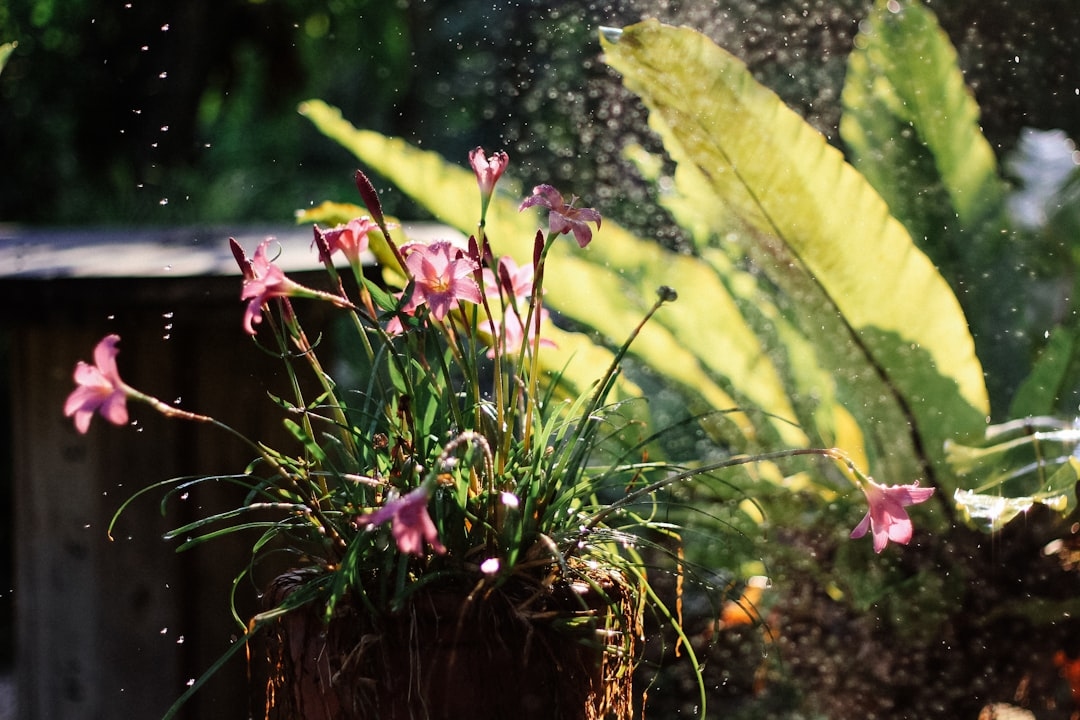
A single container on a balcony needs a completely different tool than a 400-square-foot cottage border. For small, dense plantings, a wand with precise tip control keeps water exactly where you want it. For sprawling beds, the Melnor-style oscillating coverage saves time and reduces the temptation to over-water specific areas while neglecting others. Measure your planting area before buying — if it exceeds 200 square feet, a coverage-focused nozzle or even a drip irrigation supplement will serve you better than a precision handheld model alone.
Spray Pattern Settings Explained for Beginners
Most multi-pattern nozzles use similar terminology, but the actual output varies by brand. Here’s what each setting typically means for flower care:
- Mist: Ultra-fine droplets; ideal for seedlings, newly planted transplants, and misting heat-stressed foliage
- Shower: A gentle overhead pattern that mimics light rain; safe for most established flowers
- Fan / Flat: A wide horizontal spray; good for covering ground level without hitting foliage directly
- Soaker / Stream: A focused flow directed at the soil; best for deep root watering of roses and perennials
- Jet: High-pressure stream; almost never appropriate for flowers — use it only for cleaning hardscaping
Material and Climate: Match Your Region
Geography matters more than most gardening guides acknowledge. In the Northeast, tools get stored through freezing winters, so brass and stainless steel resist freeze-crack damage that destroys plastic nozzles left in unheated garages. In the South and Gulf Coast, UV degradation is the main enemy — polymer nozzles can become brittle within a single season in Zone 9 or 10. Zinc and aluminum bodies handle Southern sun reliably. On the West Coast, particularly in California’s drought-prone regions, look for nozzles with a flow-shutoff valve — many municipalities have watering restrictions, and being able to pause flow without turning off the faucet conserves meaningful amounts of water over a season.
Eco-Friendly Watering Practices and Nozzle Choice
A nozzle with a thumb-control shutoff or trigger lock eliminates the constant water waste of walking between plants with the hose running. Studies from the EPA’s WaterSense program indicate that outdoor water use accounts for nearly 30% of average US household consumption — and much of that is inefficient. Choosing a nozzle with a shutoff mechanism and using it consistently can reduce garden water waste by an estimated 15–25% compared to open-flow watering. Pair any nozzle on this list with morning watering (before 9 AM) to reduce evaporation loss by up to 30% compared to midday sessions.
Professional greenhouse growers rarely use the mist setting for established plants in containers — they use the shower setting held 12–18 inches above the plant. True mist evaporates quickly in outdoor conditions and may not penetrate beyond the top inch of soil. Save the mist setting for seedling flats and freshly seeded areas where surface moisture retention is the priority. For everything else, a gentle shower delivers more consistent root-zone hydration with less water wasted to evaporation.
FAQs: Garden Hose Nozzles for Flower Watering
What spray setting is best for watering delicate flowers?
The shower or gentle mist setting is best for delicate flowers. These patterns distribute water in small droplets at low pressure — typically under 20 PSI — which prevents petal and stem damage. Avoid the jet or flat stream settings on any flowers, especially thin-petaled annuals like petunias or cosmos.
Can I use a regular garden hose nozzle on flower seedlings?
Only if it has a fine mist setting. Standard single-pattern spray nozzles deliver too much pressure for seedlings, which can dislodge them from soil or damage fragile cotyledon leaves. Look for a nozzle rated for seed trays specifically, such as the Rain Bird Easy-Grip or Dramm 9-Pattern, both of which include calibrated mist outputs suitable for germinating seeds.
How many spray patterns do I actually need for a flower garden?
For most home flower gardens, three patterns cover all scenarios: a fine mist for seedlings and transplants, a shower for established beds, and a soaker or stream for directed root watering. Nozzles with 8 or 9 patterns offer more flexibility, but the extra settings mostly replicate slight variations of those three core functions. More patterns aren’t better — they’re just more options.
Is brass better than plastic for garden hose nozzles?
For longevity, yes. Brass nozzles typically last 5–10 years with basic care, while quality polymer nozzles average 2–4 seasons before cracking or losing thread integrity. That said, plastic nozzles weigh significantly less, which matters during long hand-watering sessions. If you garden in the Northeast or store tools in unheated spaces, brass or zinc is a worthwhile upgrade. If you’re in a mild climate and garden casually, quality plastic is entirely adequate.
How do I prevent overwatering flowers with a hose nozzle?
Use a trigger-lock or thumb-shutoff nozzle and water in short passes rather than saturating one area at a time. Push a finger 2 inches into the soil near your plants before watering — if it feels moist, skip that session. Most flowering plants in well-draining garden beds need watering only when the top 1–2 inches of soil are dry. A nozzle with precise flow control makes it far easier to deliver a targeted amount rather than flooding a bed by accident.
Make Your First Watering Season Count
The nozzle you start with shapes your watering habits for years. Buy the cheapest option and you’ll likely overwater, underwater, or damage plants through frustration with imprecise flow — and then blame yourself instead of the tool. Buy the Dramm 9-Pattern or the GREEN MOUNT Wand for a first season and you’ll build the kind of intuitive watering routine that keeps flowers thriving through July heat and August dry spells.
One practical next step: before watering your beds for the first time, run your new nozzle over a concrete surface for 30 seconds on each setting. Watch how the water lands, how wide the spray spreads, and how much pressure each pattern delivers. That 5-minute experiment builds more confidence than reading three more guides — and your flowers will thank you for the preparation.